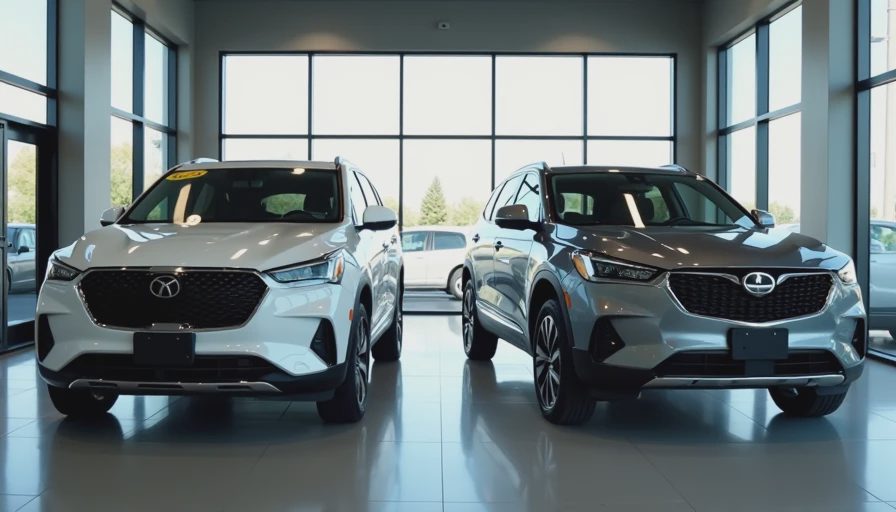
I had this exact conversation dozens of times behind the service counter. A young family would sit across from me, torn between the shiny new SUV on the lot and a 2- or 3-year-old version of the same model with lower miles and a remaining factory warranty.
One couple wanted my honest opinion. I asked them one simple question: “Are you buying for the first three years or the next eight?”
That question usually changed everything.
My name is Ryan Mercer, 39, Columbus, Ohio. Former dealership service advisor turned independent shop guy. I’ve watched thousands of vehicles come through the door, both brand new and gently used. I’ve seen what actually happens to them after the honeymoon phase ends. Today I’m laying out the practical truth about new versus 3-year-old used cars so you can make a confident decision for your family.
Don’t Buy the Dream. Buy the Ownership Story.
The new car feels exciting. Zero miles, latest safety tech, that fresh interior smell. But the 3-year-old version has already taken the biggest financial hit and might offer better value for everyday drivers like us.
Let’s break it down honestly.
The Depreciation Hammer

This is the biggest reason many smart buyers lean toward 3-year-old cars.
A typical family vehicle loses 20–30% of its value in the first year and another 15–20% by year three. That means a $38,000 new SUV might be worth only $26,000–$29,000 after three years.
If you buy that same vehicle at three years old for around $27,000–$29,000, you’ve avoided the steepest part of the depreciation curve. Over the next five years, it will lose value much more slowly.
I’ve seen families drive off in a new car feeling proud, only to be shocked two years later when they try to trade it in and discover how much money disappeared the moment they signed the papers.
Upfront Cost vs Monthly Reality
Yes, the new car often has lower monthly payments thanks to manufacturer financing deals and longer loan terms. But that doesn’t mean it’s cheaper overall.
A 3-year-old used car usually requires a bigger down payment but shorter loan time and lower total interest. More importantly, you’re not paying premium prices for features you might not even use.
Warranty and Reliability
This is where it gets interesting. Many 3-year-old cars still have significant factory warranty remaining — often bumper-to-bumper until 36,000 miles or powertrain until 60,000–100,000 miles depending on the brand.
In my experience, a well-maintained 3-year-old Honda or Toyota is often more reliable in the short term than a new vehicle that’s still working out early production quirks.
I once had a customer who bought a brand-new model in its first year of production. They came back repeatedly for minor issues that were eventually fixed under warranty, but it was frustrating. The same model in its third year was rock solid for most buyers.
Real-World Operating Costs
Fuel economy is usually identical between a new car and a 3-year-old version of the same model. Insurance might be slightly higher on a new car due to replacement cost. Maintenance is often similar in the early years.
The big difference shows up in:
Tires and brakes: New cars often come with cheaper OEM tires that wear out faster. A 3-year-old car may already be on better aftermarket rubber.
Repairs: The 3-year-old has proven itself. You know common issues for that model year. New cars sometimes have unknown software glitches or design changes.
Features: Do You Actually Need the Latest?
New cars come with the newest safety tech, infotainment, and driver assists. Some of it is genuinely useful (automatic emergency braking, blind-spot monitoring). But a lot of it is nice-to-have rather than need-to-have.
I’ve had parents tell me the fancy new system was distracting at first. A 3-year-old car usually has the core safety features that matter most for families.
My Personal Recommendation for Most Families
After watching hundreds of ownership stories play out, here’s what I usually tell people in your situation:
Buy the 3-year-old used car if:
You plan to keep vehicles for 6+ years
You want to minimize total ownership cost
You’re disciplined about maintenance
You can get a clean example with full service records and a PPI
Buy new if:
You really value the latest safety technology and want full warranty peace of mind
You drive very high miles and want the newest reliability updates
Manufacturer incentives make the effective price very competitive
You simply hate the idea of buying someone else’s car
For most middle-income families I’ve advised, the 3-year-old option has been the smarter financial move.
A Real Service Lane Story
A couple I worked with bought a new midsize SUV. Beautiful truck, loaded with options. They loved it for about 18 months. Then they needed money for a home project and tried to trade it in. The depreciation hit them hard — they owed more than it was worth (negative equity).
Two years later their friends bought the exact same model, 3 years old, for $11,000 less. Same color, similar options, remaining warranty, and much lower monthly costs. The friends are still driving it happily four years later.
The difference wasn’t the car. It was when they bought it.
How to Make the Smart Choice
Pick the specific model and trim you want first.
Compare actual market prices: new vs 2–4 year old examples.
Run the 5-year total cost numbers (purchase + fuel + insurance + maintenance + depreciation).
Always get a pre-purchase inspection on used vehicles.
Test drive both back-to-back on the same day if possible.
Final Thought
There’s no universally “right” answer. But for ordinary drivers who need reliable transportation without overspending, a well-chosen 3-year-old used car has quietly been one of the smartest moves I’ve seen families make.
It lets you enjoy a modern, safe, comfortable vehicle while letting someone else pay for that brutal first depreciation drop.
That’s practical ownership thinking. That’s what we do here.
Take your time. Run your own numbers. Buy the ownership story that fits your actual life, not the one that looks best in the brochure.
Your future self (and your bank account) will thank you.




No notes yet — write the first.